Hazem Harb
The Gesture of a Practice
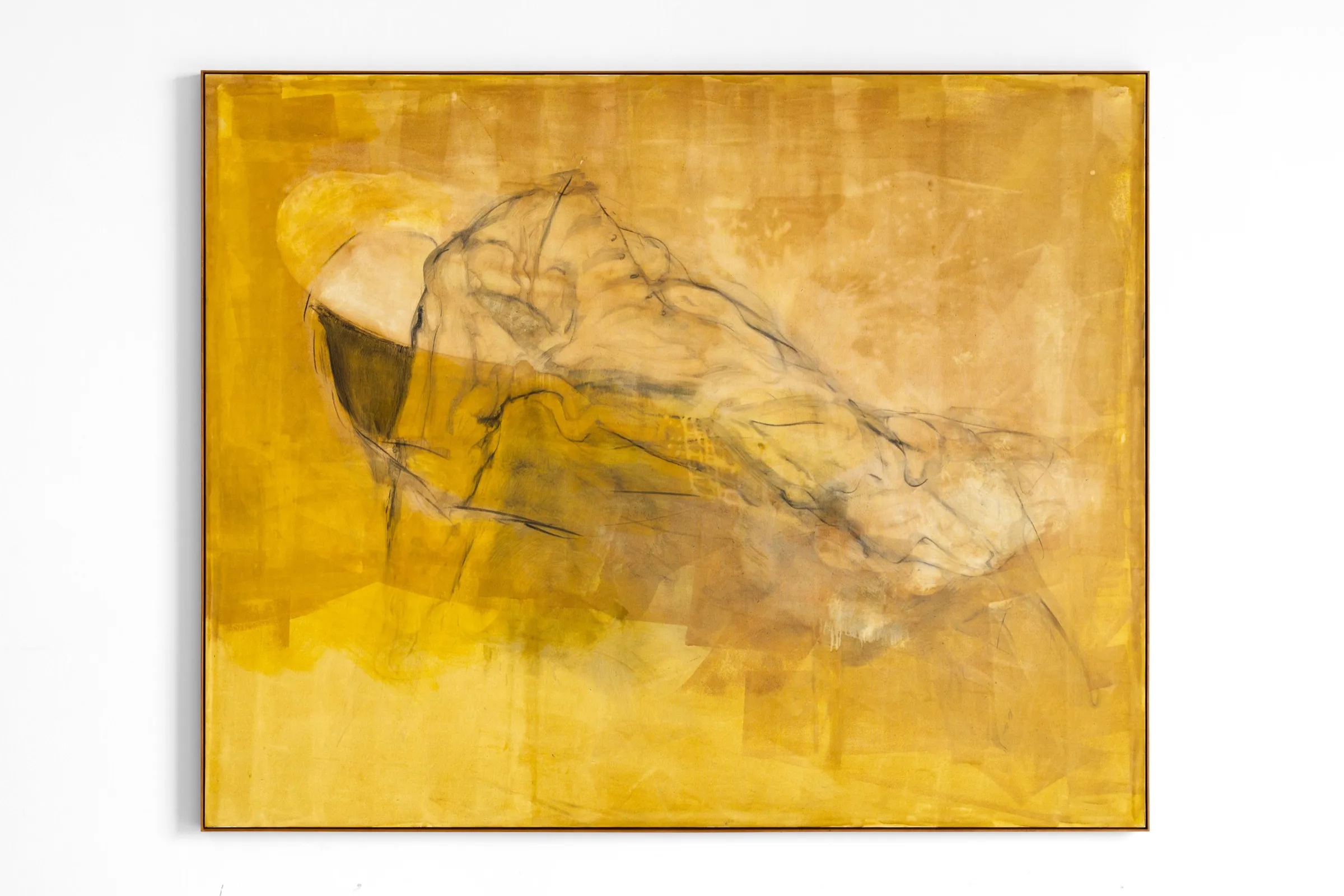
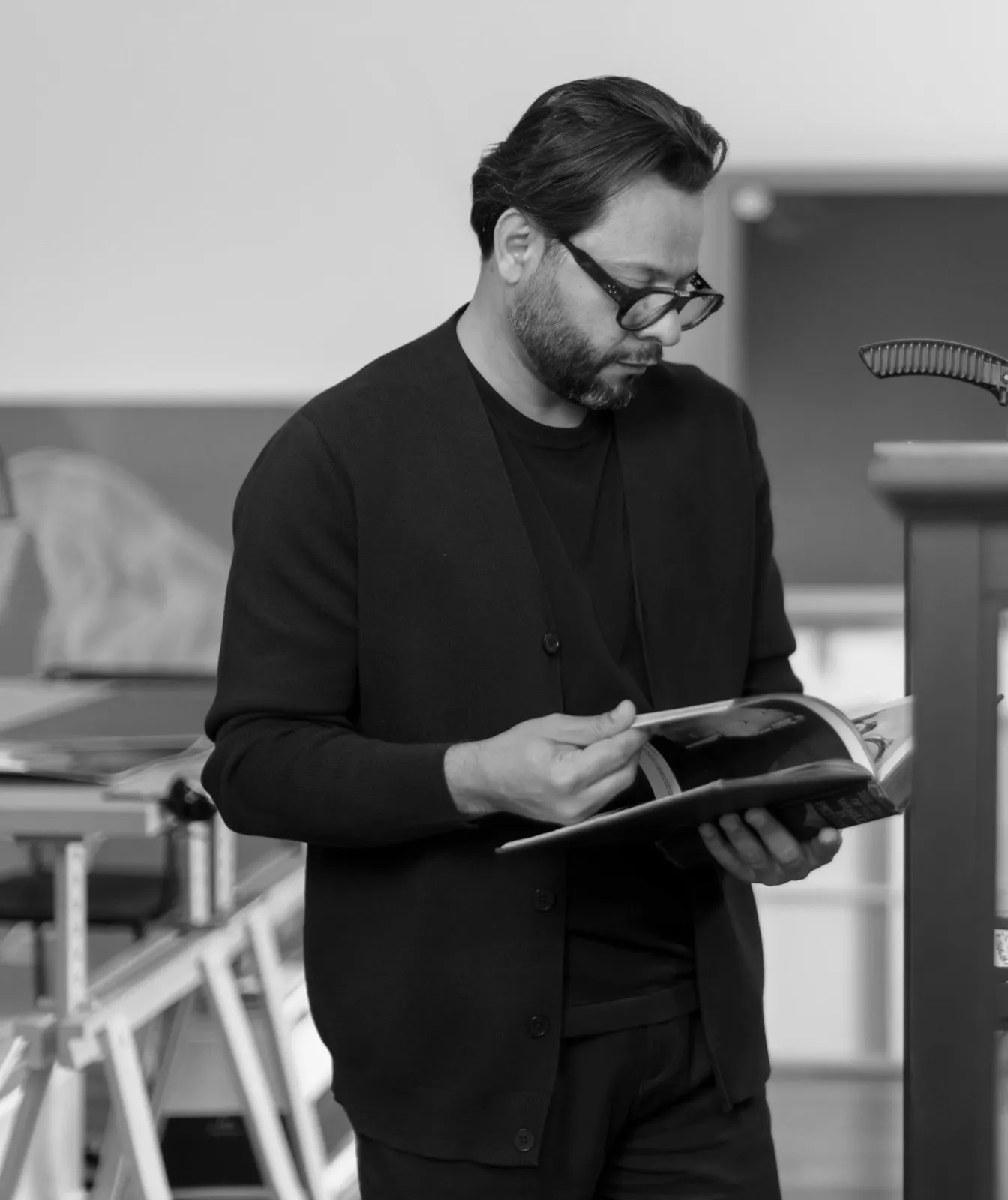
In Hazem Harb’s End of Monuments paintings, pale, irregular forms emerge from fields of ochre. Dark lines trace their contours, gathering in places and fading elsewhere, leaving their outlines unresolved. They suggest fragments of bodies, but also the ridges and hollows of a landscape. When Harb speaks about his Palestinian homeland, he makes a similar connection. “If I talk about the land, I am talking about myself,” he says. “My land is me, it is my body, it is my heart.”
Painted in 2015, the series dates from a period when Harb began incorporating archival photographs of Palestine into his work. In Archaeology of Occupation, made that same year, geometric shapes and concrete structures obscure sections of historic photographs, blocking views of the landscape and the people within it. Across his wider collage practice, he cuts and layers photographs, combining them with drawings, paper and coloured plexiglass. Working with these records of Palestinian life allows him to question how history is assembled and what is left out.
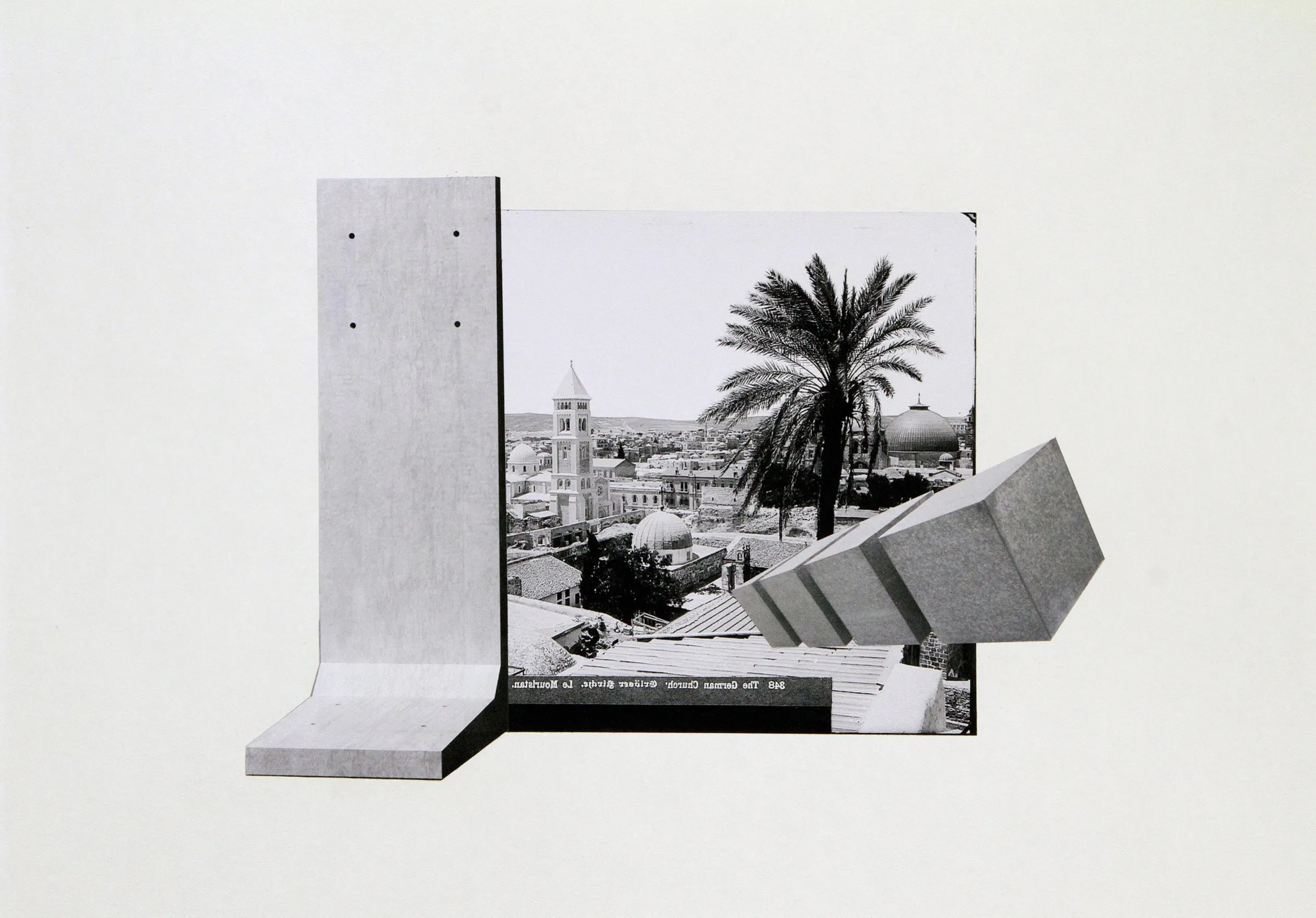
Painting, however, was familiar territory. Harb calls it his “comfort zone”, and his move into collage and other materials came from wanting to push himself further conceptually. He knew he would return to painting and drawing, but wanted a reason to do so. The body connects these different ways of working, even though it might not be immeditaly obvious. “With the collage works, you can still call them bodily,” he says. “Just the tools are different.”
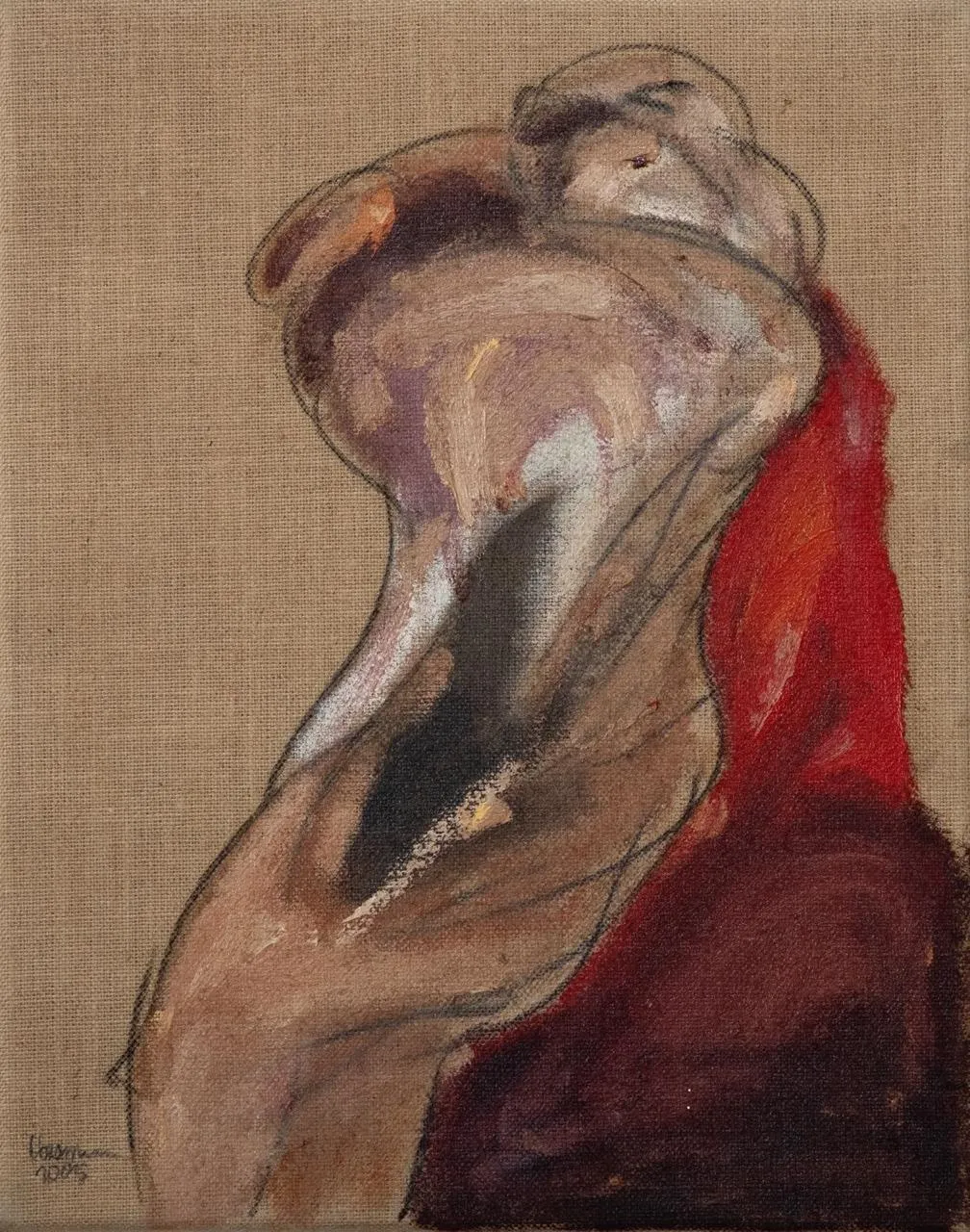
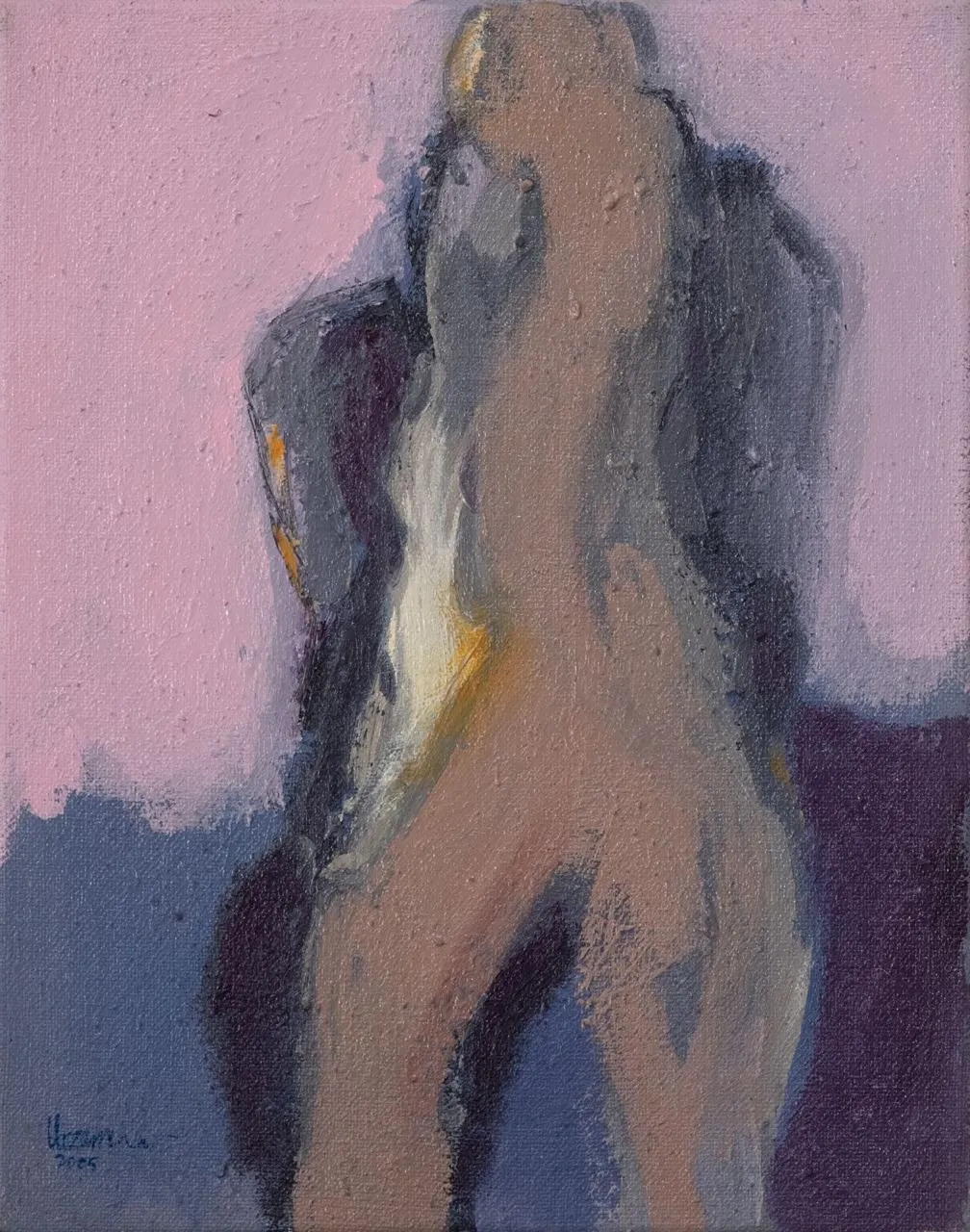
Harb’s interest in drawing and painting began in childhood. Encouraged by his mother, a seamstress, he drew and made collages that she carefully preserved. He was only seven when the First Intifada began, and like so many children of Gaza, violence was part of the world in which he grew up in.
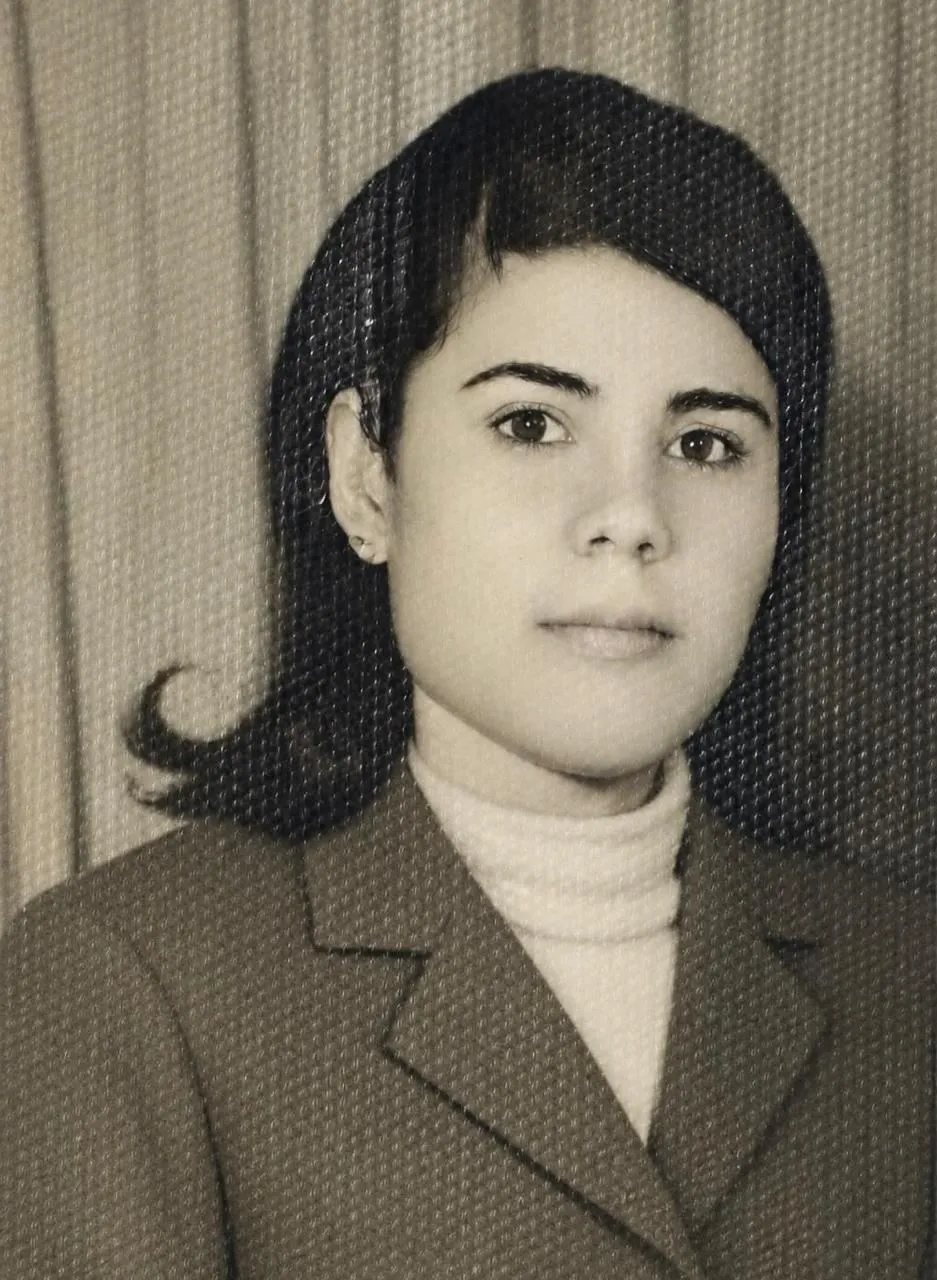
His early drawings remain among his most treasured possessions. Saved by his late mother, they form part of a thin folder of papers that he brought back to Dubai from Gaza just days before the war began in October 2023. Pages from his teenage sketchbooks reveal surrealist forms and sculptural figures, evidence of an early interest in the body that continues today.
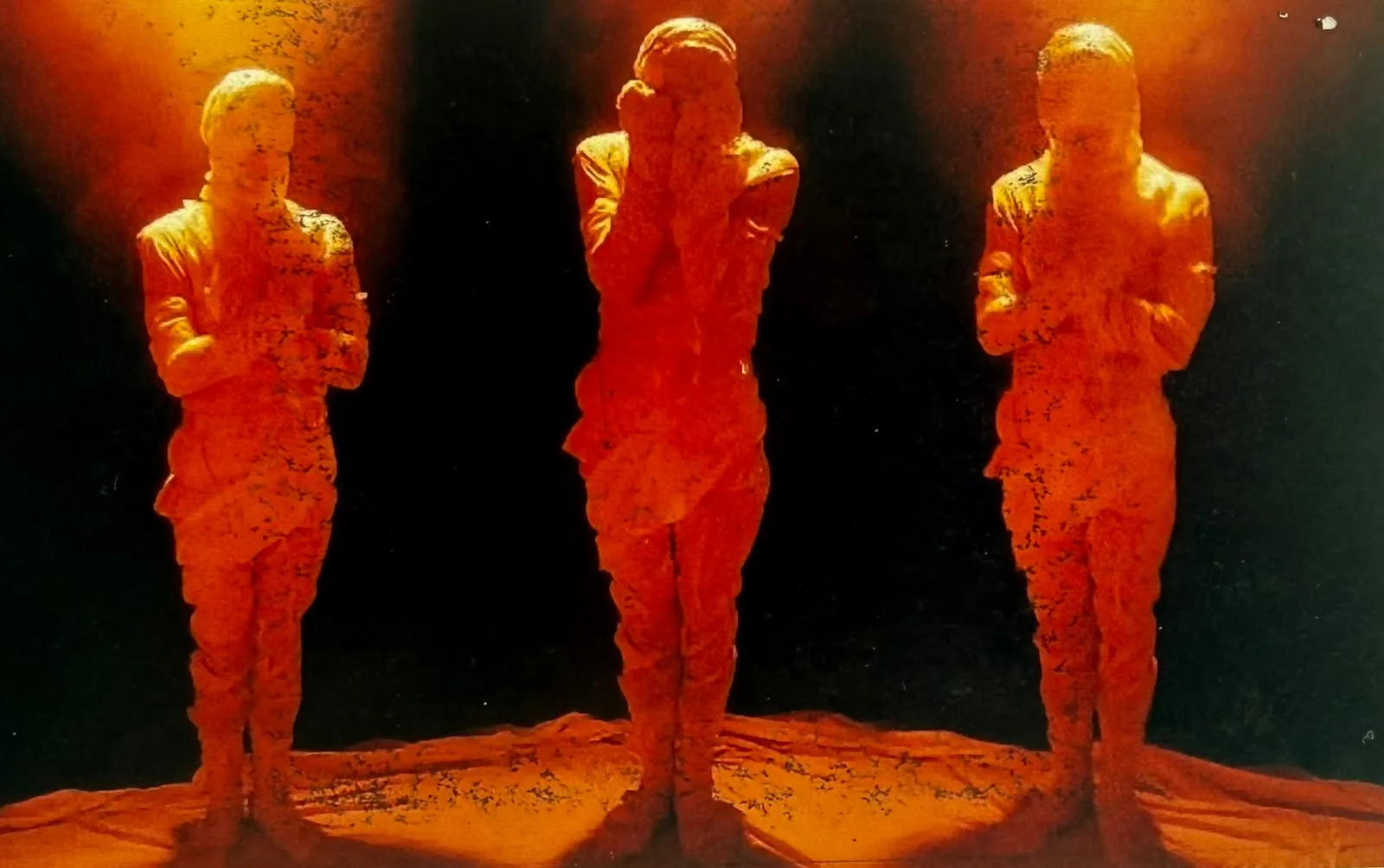
In his personal archive, there are also photographs of EXIT, a performance from 2004 in which he wrapped himself in gauze, binding and restricting his own body. These documents reveal a way to understand how Harb works and the kind of concentric patterns that underlie his wider practice. Although not immediately obvious, an image, a material or a gesture can return years later, carrying a different meaning. And such it is with painting.
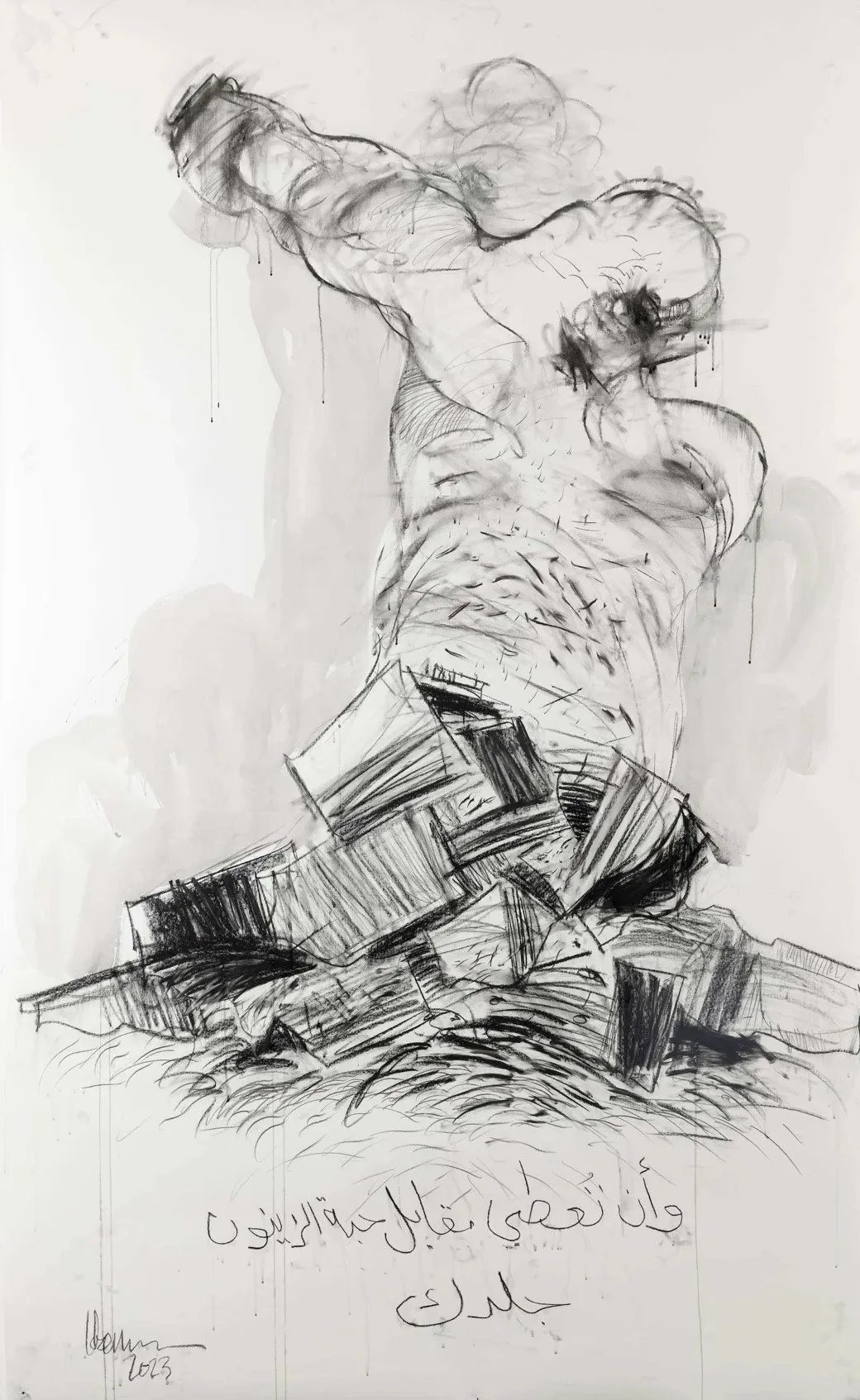
Harb says that it was only with the 2023 works in Dystopia Is a Noun that he began drawing from a place of pain. The large charcoal drawings, which are painful to witness and exude the chaos that Harb was experiencing at the time, speak to a form of instinctive creation. “Those charcoal drawings were from a really urgent place,” he says. “I made them with my body and from my gut. They were made with my hands and my sweat; they hold my DNA.”
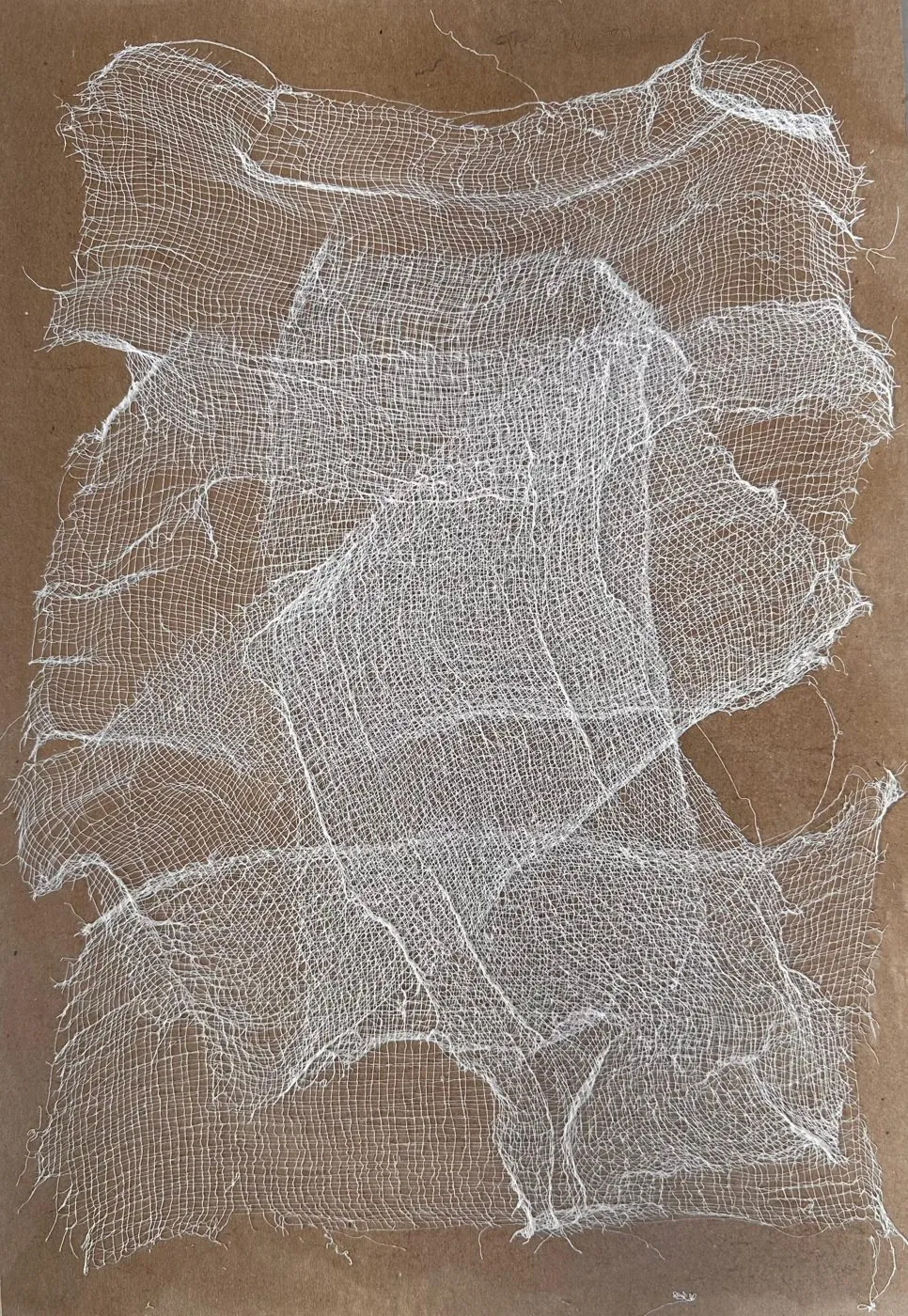
Following his father’s kidnapping and imprisonment in 2024, he returned to gauze. In the resulting Gauze series, he uses the material with painterly gestures to create ghostly figures on raw canvas deliberately chosen for its proximity to his own skin tone. The association of gauze as a material that is used wrapping of the dead is central to how these works can be read, particularly poignant as the death tolls rose to sickening numbers. And in Harb’s work, the figure, often a self portrait, seems to occupy an uncertain space between life and death. What sanity is there when all around you is crumbling?
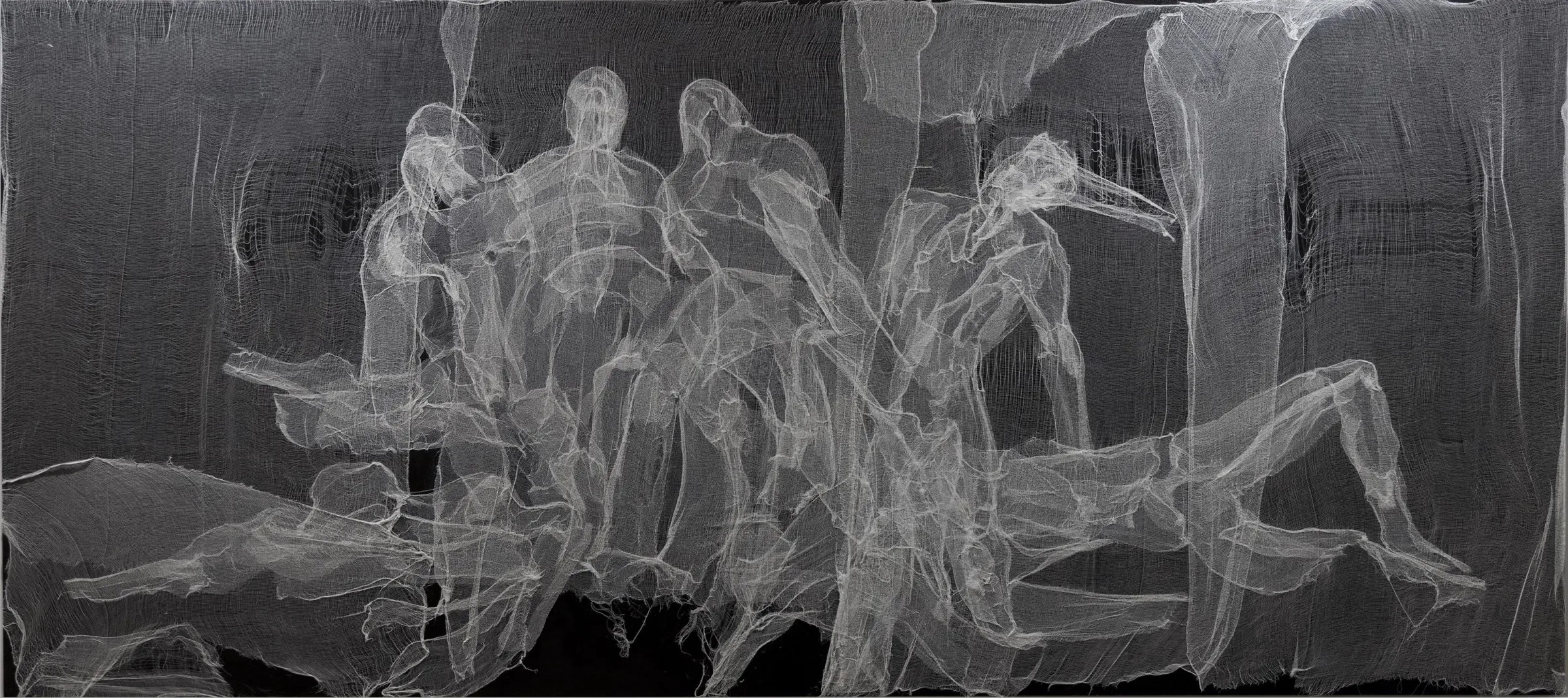
And it is this most recent reading that brings me to the conclusion that Harb’s practice moves in circles. Painting, collage and performance bring him back to gesture and the body with the reasons for returning changing with his circumstances. Gauze carries the memory of his own bound body as well as the associations of a burial shroud. The cuts through an archival photograph divide a landscape; in the paintings, broken outlines leave bodily forms incomplete.
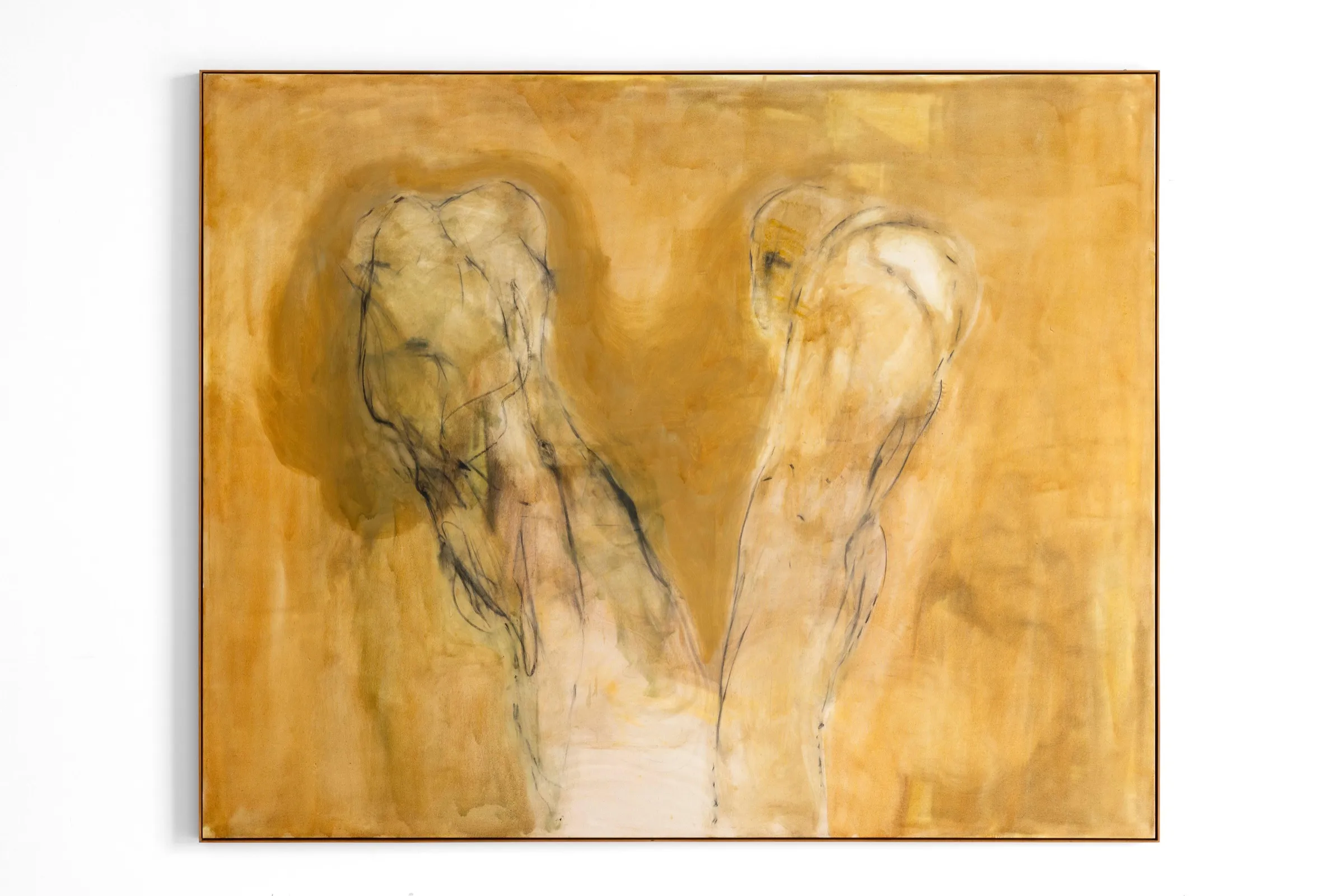
Viewed in this way, the title End of Monuments sits somewhere in the tension between permanence and fragility. A monument promises a stable form through which something can be remembered but Harb’s forms are not at all stable. Their edges are at once defined and blurred, they are visible but they fade into the earthy tones. For all their ambiguity, they retain a bodily presence, giving physical expression to the connection Harb himself describes between the artist and his land and so, they offer a connection to the viewer that transcends borders and histories and speaks to the universality of the human condition.
-ends-
All images courtesy the artist and Tabari.